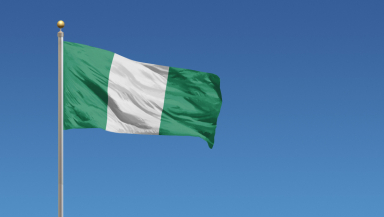
The Nigerian government has denied claims it paid a “huge” ransom to Islamist militants in order to secure the release of over 200 students and staff kidnapped from a Catholic school last November.
The release of the last of the captives, who were taken from St Mary’s Catholic School in Niger state, came just before Christmas Day. At the time a presidential aide said a “military-intelligence driven operation” had led to the release of the prisoners.
A report by AFP this week contained claims from intelligence sources close to the matter who alleged that the Nigerian government may have paid as much as seven million dollars to Boko Haram and agreed to the release of two of the group’s commanders.
Nigeria’s information minister, Mohammed Idris, said AFP's claims were “completely false and baseless”. According to the BBC, Idris said such claims represented a "disservice to the professionalism and integrity" of Nigeria’s security forces.
Nigeria’s security forces have often been criticised for their inability to deal with militant attacks. Church leaders have spoken of the forces being entirely absent, even when advance warning is given of attacks. On another occasion the security forces were able to stave off a militant attack in one location, while being unable to prevent militants from burning, killing and plundering in another.
Last November, in recognition of the ongoing violence, which disproportionately impacts Christians, Nigerian President Bola Tinubu announced a nationwide state of emergency and a doubling of the police forces.
The US has taken a keen interest in the situation of Christians in Nigeria, with Donald Trump ordering airstrikes on Christmas Day against militant camps in the north of the country. A recent proposal by the US House Committees on Appropriations and Foreign Affairs suggested a stronger partnership between Nigeria and the US to defeat the militants.
The proposal suggested withholding aid from Nigeria if serious steps to protect Christian communities were not taken, and the facilitation of arms sales to Nigeria. Excluding Russian and Chinese influence from Nigeria was also a stated aim of the proposed policy.