Global leaders at the COP30 climate change conference will focus on the possible link between climate change and global health, a move that has been welcomed by the head of a charity that tackles leprosy.
Peter Waddup, Chief Executive of The Leprosy Mission, argues that the connection between the two has never been clearer, citing his experiences in Sri Lanka.
Higher temperatures, drought and floods have made parts of northern Sri Lanka particularly vulnerable and have contributed to the scarcity of food and clean water.
Climate change is not the only factor bringing hardship to Sri Lanka however. It fell victim to the devastating Boxing Day tsunami in 2004 and for a quarter of a century was engaged in a civil war, which only came to an end in 2009.
Corruption, high levels of debt and mismanagement have also contributed to an economic crisis, which in turn has led to a political crisis in the country.
Poor harvests have started to lead to more poverty and malnutrition, which in turn weakens immune systems and increases vulnerability to diseases like leprosy.
Waddup said, “We’re seeing the direct impact of climate change on health. In the communities where we work, the crisis is not imminent—it’s already a daily reality.”
Between 2022 and 2024, partners of The Leprosy Mission discovered 846 new cases of leprosy – 99 of them in children.
The charity has been working with locals in a bid to help alleviate the effects of climate change, like teaching 'climate smart' agricultural techniques and encouraging the growth of native crops in order to improve the health of the soil.
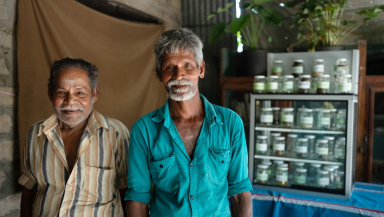
Other initiatives include cookery classes in which the locals learn how to prepare nutritious meals, and “seed banks” in which locals borrow seeds from the homes of people with leprosy and, after harvesting their crop, return the seeds.
Peter Waddup adds, “Communities like those we serve in Sri Lanka are too often overlooked in global climate strategies,” he said.
"They’re excluded from climate-related disaster planning and underrepresented in policy discussions.
“But they are the ones suffering most. Climate change is driving them deeper into poverty. We need governments to act faster and more boldly. The team in Sri Lanka is proving what’s possible with modest investment and shared knowledge.”