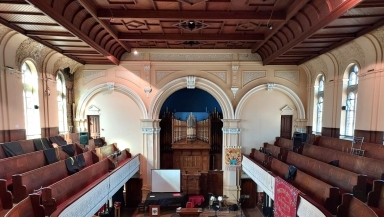
The government has announced plans to invest £1.5 billion into historic buildings in England at the risk of closure, a significant portion of which will go towards places of worship.
The funds will be distributed over a five-year period and are aimed at restoring “national pride in community assets”. Just over half of the funding (£760 million) will go towards museums struggling with maintenance costs. Significant funds have also been committed to libraries and creative arts projects.
As part of the project the government said it had earmarked £92 million for a Places of Worship Renewal Fund over the next four years, up to 2030. The government said this fund would replace the existing Listed Places of Worship Grant Scheme, which is currently worth £23 million - it had been £42 million prior to cuts made in 2025.
Places of worship will also be able to apply to a separate £75 million fund for repairs and conservation of “at-risk” historic buildings, and a £46 million Heritage Revival Fund to help communities "take control of and look after local heritage and bring buildings back into public use".
It comes as churches prepare to lose VAT exemption on repairs from April, which critics have warned will jeopardise maintenance and restoration projects and significantly add to costs.
Emily Gee, Director for Cathedral and Church buildings for the Church of England, broadly welcomed the news but expressed concerns about the abolition of the Listed Places of Worship Grant Scheme.
In a statement, she said, "We warmly welcome the Government’s Places of Worship Renewal Fund and the certainty of this investment in repairs and improvements for eligible parish and cathedral church buildings.”
She added that the Church was also pleased by the government’s recognition of the wide range of spiritual, cultural, historical and social benefits that churches bring to their local communities.
"However we are very concerned that the end of the Listed Places of Worship Grant Scheme - after more than 20 years - will mean added pressure on local fundraisers and inevitably a drain on other sources of funding. We will work with the wider sector and the Government to see how that burden can be alleviated," she continued.
"We look forward to seeing the details and working out what it means in practice for the Church of England’s 12,500 listed church buildings.
"We will continue to work closely with other church buildings’ charities and funders, Historic England and other denominations and faiths, as well as the Government, in this important period of transition."
Culture Secretary Lisa Nandy, who announced the scheme, said the programme would “keep the doors open and the lights on” in thousands of local institutions which are “part of who we are as a nation”.