Four global Christian denominations have issued a joint appeal urging governments and international institutions to recommit to peacebuilding and diplomacy, warning that the world is reaching a "dangerous tipping point".
Leaders of the World Communion of Reformed Churches, the Anglican Communion, the World Methodist Council, and the Lutheran World Federation came together to express deep concern over the growing human toll of ongoing conflicts.
In particular, the Church leaders said that the recent escalation in Iran and the Middle East had only added to the "distressing list" of ongoing conflicts including those in Ukraine, Sudan, Gaza, and Myanmar.
Speaking on behalf of millions of Christians worldwide, the organisations said they are united in both grief and determination as they witness the widespread suffering caused by war.
The church leaders warned that the persistence of these wars reflects a troubling failure by the international community to prevent violence through diplomacy and cooperation.
They criticised what they described as a growing reliance on military responses rather than dialogue and negotiation, noting that enormous resources are increasingly being directed toward weapons and defence rather than humanitarian aid and peace initiatives.
"As old wars rage on unabated, new ones arise. The world is approaching a dangerous tipping point - a time when violence becomes the norm and death and suffering of people and communities condoned," they said.
The organisations also called for accountability for breaches of international law and acts of violence against civilians, and said that those directly affected by conflict must be listened to, with their rights, livelihood and dignity safeguarded.
In their message, the leaders warned of a global environment in which peace is no longer widely pursued as a shared moral goal but is, as recently voiced by Pope Leo, increasingly framed in terms of power and military dominance, a trend they argue threatens international law and cooperation among nations.
"We reaffirm our strong commitment to peace, in a world increasingly amassing arms, and accepting destructive conflict as inevitable," they said.
They continued, “The peace the world longs for is not only the absence of wars, nor one which is enforced by coercion and dominance.
“It is not to be brokered by the highest bidder. Peace is not for sale. It is a peace which includes justice and which transforms our collective culture. Peace is the presence of justice, dignity, and flourishing for all God’s children.”
The statement also highlighted the importance of multilateral cooperation, pointing to the role of international institutions such as the United Nations in facilitating dialogue and mediation between nations.
While acknowledging the need to reform global governance structures, the leaders urged that such reforms be approached constructively rather than with cynicism.
They added: “In our faith tradition, we find ourselves in the period of Lent and the approach to Easter, in a cycle of reflection which includes suffering, fear and the destruction of what is good. Our Christian faith teaches us that such times can be faced with courage and integrity; the way is not easy, but renewal and recreation are possible.”
The statement notes that churches and their partners continue to provide humanitarian assistance and work toward reconciliation and peace in communities affected by violence, and it called on governments, regional organisations, and international bodies to invest more heavily in diplomacy, humanitarian support, and grassroots peacebuilding initiatives.
The leaders also stressed the importance of supporting local communities, civic organisations, and religious groups that work to prevent conflict and rebuild societies.
They pledged to continue advocating for peace, praying for those affected by war, and supporting victims through humanitarian and social ministries.
They concluded, "As churches, we pledge to be relentless advocates for transformative peace.
"We will continue to pray for the victims of war, to advocate for justice before political leaders, and to serve those affected by conflict through our diaconal ministries.
"We commit to educating our members on the ethics of peace and challenge the narratives of hate and enmity within our society."
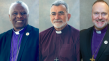
The statement was signed by Archbishop Anthony Poggo, Secretary General of the Anglican Communion; Rev. Dr. Anne Burghardt, General Secretary of the Lutheran World Federation; Rev. Philip Vinod Peacock, General Secretary of the World Communion of Reformed Churches; and Rev. Dr. Reynaldo Ferreira Leão Neto, General Secretary of the World Methodist Council.