The European Parliament has heard how Kurdistan can act as a model of religious tolerance for the wider Middle East.
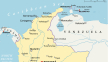
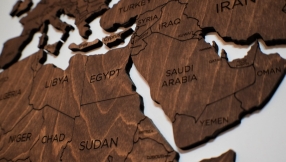
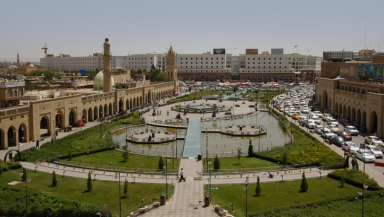
Kurdistan is the region of the Middle East traditionally inhabited by the Kurdish people. It is not an independent sovereign state and, as a region, overlaps with a number of countries, including Iraq, Iran, Turkey and Syria.
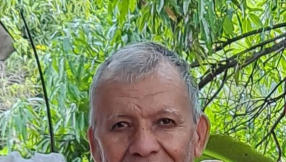
Speaking at the European Parliament, Awring Nawroz Shaways, founding president the Kurdish Genocide Lobby Center (KGLC), said that Kurdistan, while not perfect, had long been a place of religious diversity.
Shaways noted that after the US invasion of Iraq and the subsequent rise of ISIS, hundreds of thousands of Christians fled to the region, where they were accepted into wider society, rather than being placed in refugee camps.
“Christian families rebuilt their lives in Erbil, Duhok, and Sulaymaniyah. Churches were restored and expanded. Schools continued to operate in Syriac. Cultural traditions were preserved," said Shaways.
"This is what decades of coexistence look like in practice: not the absence of difference, but the presence of mutual respect.”
Christians, noted Shaways, are guaranteed representation in the Kurdish Parliament, ensuring that the concerns of their community or communities are heard.
While Shaways praised Kurdistan for its recognition of minority communities and generally good record on religious freedom and pluralism, he called for greater accountability and transparency, an education system that better reflects Kurdistan’s diverse society, and “laws that explicitly protect against discrimination”.
“The significance of the Kurdistan Region extends beyond its borders. In the Middle East often characterized by division, it offers an example imperfect but meaningful [example] of what coexistence can look like. It shows that diversity does not have to lead to fragmentation," he said.
Shaways concluded his speech by saying, “The strength of any society is measured not by the dominance of one group, but by the dignity afforded to all.
"And in that measure, the Kurdistan Region has taken important and promising steps forward steps that, with the right framework and continued commitment, could serve not only its own people, but also the broader future of the Middle East."